

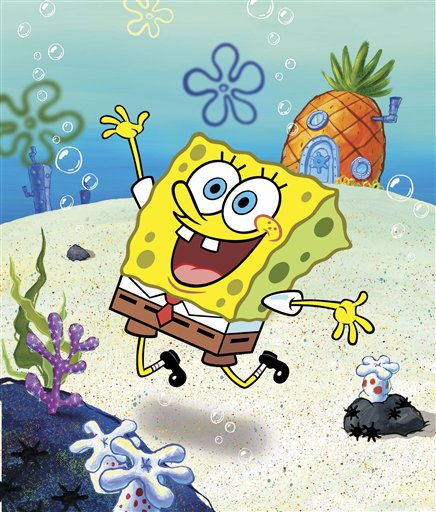

This undated file image released by Nickelodeon shows a scene from the animated show "SpongeBob SquarePants." The cartoon character is in hot water from a study suggesting that watching just nine minutes of "SpongeBob SquarePants" can cause short-term attention and learning problems in 4-year-olds. (AP Photo/Nickelodeon, File)
“SpongeBob SquarePants” may be affecting your child’s neurological functions, a new study suggests.
The study, which was published Monday in the Journal of Pediatrics, randomly assigned 60 4-year-olds to either watch “SpongebBob,” the slower-paced educational PBS cartoon “Caillou,” or draw with crayons for nine minutes. All of the children then took mental function tests, and the “SpongeBob” watchers had more trouble focusing and delaying gratification than the other two groups. The “Caillou” watchers and children that drew scored around the same.
All three sets of children had scored equally on attention tests before they began the activities.
While previous research has shown that television can be linked to long-term attention problems in youngsters, this is the first study to suggest that problems can begin immediately–and after very little exposure.
The lead author of the study, University of Virginia psychology professor Angeline Lillard, said that it wasn’t just “SpongeBob” that affected children, and that similar problems were found in kids who watched other fast-paced cartoons.
Researchers concluded that “Parents should be aware that fast-paced television shows could at least temporarily impair young children’s executive function.”
“I wouldn’t advise watching such shows on the way to school or any time they’re expected to pay attention and learn,” Lillard added.
However not everyone agrees with the new findings.
“Having 60 non-diverse kids, who are not part of the show’s targeted (audience), watch nine minutes of programming is questionable methodology and could not possibly provide the basis for any valid findings that parents could trust,” Nickelodeon spokesman David Bittler said. He also pointed out that the television show is geared towards children aged 6-11, not 4-year-olds.
With Associated Press


Island Harvest Receives $225,000 from Robin Hood Foundation