

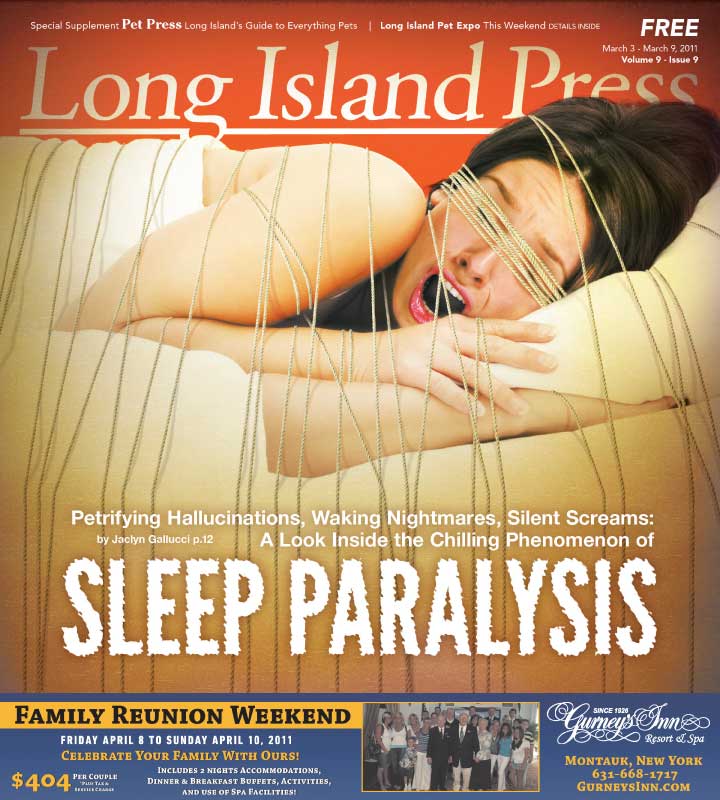
STRANGER THAN FICTION
Over centuries, symptoms of sleep paralysis have often been attributed to an evil being, an unseen monster or a demon in ancient times, Shakespeare’s old hag in Romeo and Juliet, and even aliens. F. Scott Fitzgerald describes SP in The Beautiful and the Damned: “…I lay there, frozen with most awful fears, not daring to drag away my hand; yet ever thinking that I could but stir it one single inch, the horrid spell would be broken.”
In Japan, SP was known as “kanashibar” and in China as “ghost oppression.”
The Nightmare, an oil painting by Henry Fuseli, is considered a depiction of SP. During the Salem Witch Trials, several people claimed they were attacked by alleged witches during the night, citing symptoms of suffocation that could easily be attributed to SP. But the condition was first identified scientifically by psychologist Weir Mitchell in 1876.
“The subject awakes to consciousness of his environment but is incapable of moving a muscle; lying to all appearance still asleep,” Mitchell wrote. “He is really engaged in a struggle for movement fraught with acute mental distress; could he but manage to stir, the spell would vanish instantly.”
The first definition of sleep paralysis was penned by Dr. Samuel Johnson in his A Dictionary of the English Language in 1755 as “nightmare”—which was considered at the time, not merely a bad dream, but an episode of demons or incubi sitting on the chests of their victims during the night.
A study published in Psychiatry and Clinical Neurosciences in 2009 found that more than 90 percent of Mexican teens know the phrase “a dead body climbed on top of me” to describe SP. More than 25 percent of them had experienced it personally.
And many around the world, including scientists, have proposed SP as an explanation for paranormal encounters.


Long Island Press: A Ten-Year Retrospective

Top 10 Long Island, National and International News Stories of 2012