

Agalloch's Marrow of the Spirit: It's pretty great!
Agalloch
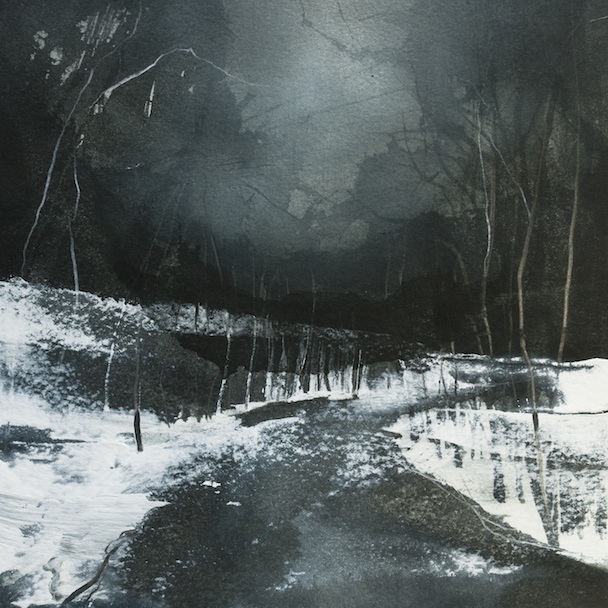
Marrow of the Spirit
(Profound Lore)
As promised last week, a few words about Agalloch. But first, some context:
One of the architects of black metal was a Norwegian man named Øystein Aarseth, who called himself Euronymous. Almost everything with which Euronymous was involved in the late ’80s and early ’90s went on to define the genre in some archetypal way. He was the mastermind behind Mayhem, perhaps the most important band in black metal’s history, as much for their mythology as their music. He ran a small label called Deathlike Silence, which released albums by some of the genre’s early greats, including Burzum, Abruptum and (of course) Mayhem. He owned a record store in Oslo called Helvete, a hangout for the nascent black-metal scene. Most famously, Euronymous was murdered, at age 25, by Burzum’s Varg Vikernes—stabbed to death on the night of August 10, 1993—which was the apotheosis of black metal: a shocking single instant upon which a legend and a faith have been built.
Because of his place at the center of this storm, Euronymous’ utterances have taken on almost gospel-like qualities among certain adherents of the genre; they are parsed, quoted and put forth as the purest vision of what black metal is and must be. Euronymous abhorred “trends” and “normal” people. In one interview he said, “Black metal has nothing to do with the music itself…it’s the LYRICS, and they must be SATANIC. If not, it is NOT black metal… If a band cultivates death and worships Satan, it’s black metal.”
That was essential to Euronymous’ vision for the genre, and on some levels, that rigid and dogmatic approach has come to both shape and confine black metal. On other levels, though, it is remarkably quaint and naïve: Since Euronymous’ death, the genre has grown in a million new and exciting ways, and it’s hard to argue the music would be better had its most talented practitioners limited themselves to such a silly, adolescent set of rules and worldview.
So, with all that said, on to Agalloch.
Agalloch are a black metal band from Portland, Ore. Over the last 14 years, they’ve released a small and influential discography featuring what they call “a multifarious sound consisting of black metal, folk, progressive rock, and ambient soundscapes.” That may come off a little pretentious, but it’s a reasonable assessment of the band’s music—music rich with texture, nuance, shadows and light. To be fair, most black metal is heavily atmospheric: It creates a dark, wintry ambience built on hissed vocals, blast-beat drums and tremolo guitars. That’s the basis of Agalloch’s music, too, and that’s why it would be hard to place them in any genre other than black metal—even though they might beg to differ (they call themselves “dark metal”), and even though Euronymous would surely disapprove.
For one, Agalloch does not worship Satan, nor do they “cultivate death.” Their lyrics are often about the grandeur of the natural world. Their amazing new album, Marrow of the Spirit, opens to the sound of a flowing river. In one recent interview, Agalloch guitarist Don Anderson said of the band’s lyrics: “The Northwest is filled with evergreen trees, waterfalls, rows of massive mountains and the coast. It’s impossible not to be affected by it.” In another interview, the band’s frontman, John Haughm, said some of his new lyrics were about “the healing process” following an illness.
That’s not to say Marrow of the Spirit is some gentle or ethereal new-age frolic. After a somber cello opener, the album bursts into a furious hailstorm of drums and guitars that usher in the swirling, labyrinthine and truly thrilling “Into the Painted Gray.” Here (and throughout the album), no small amount of credit is due new drummer Aesop Dekker, whose work on Marrow of the Spirit stands among the very finest of the genre, even while challenging the ideas of what black-metal drumming “should” sound like. At 12 minutes, 45 seconds, it’s the album’s second-longest cut, though nothing here (save the opener) falls shorter than 9:35 (that would be the catchy, goth-y and quite wonderful “Ghosts of the Midwinter Fires”).
Those marathon song lengths stay true to a certain brand of old-school black metal, too—acts like Burzum, in particular, offer oceanic songs in which listeners can get lost—but rather than build a mood through droning repetition, Agalloch’s songs are elaborate constructions in which leitmotifs are revealed and repeated, and throughout which tension is built, sustained and released. “The Watcher’s Monolith” opens with a languid, melancholic acoustic strumming, joined by electric guitar that streaks downward like snowfall in moonlight, before it finds its stride as a chugging metal anthem…and then, again, it changes pace. “Black Lake Nidstång,” the album’s epic 17-minute-plus centerpiece, is built around a simple Sabbath-y riff and Haughm’s tortured howl, but its carefully arranged complexity brings the piece to dizzying heights. Soon after the 10-minute mark, the song shifts from one thing into something else entirely: A Moog fades in, then the ringing of chimes, delicate and crystalline. Then, out from the fog bursts an arena-sized riff, itself repeating, building, into something altogether beautiful. In all, it’s more like Sigur Rós or Pink Floyd than it is, well, Mayhem.
And therein lies the rub. Even the most open-minded of black-metal fans has Euronymous’ views emblazoned somewhere in the recesses of his or her psyche. The genre today is almost without any clarity of mission—it is a glorious and unwieldy tangle of subgenres and tangents—and any attempt to understand it must begin with Euronymous and his principles. Agalloch are hardly the first band to break free from those inane conventions, but listening to this remarkable music now, I can’t help but think Euronymous would frown on much of what has been built in his wake. Marrow of the Spirit is something grander, more generous, than what he envisioned for black metal. Who knows? Maybe, after all this time, he would approve. Or maybe the genre needs a new definition, a new apotheosis. [10/10]


Top 10 Albums of 2010: Year In Review